 01902 475175
 instant quote
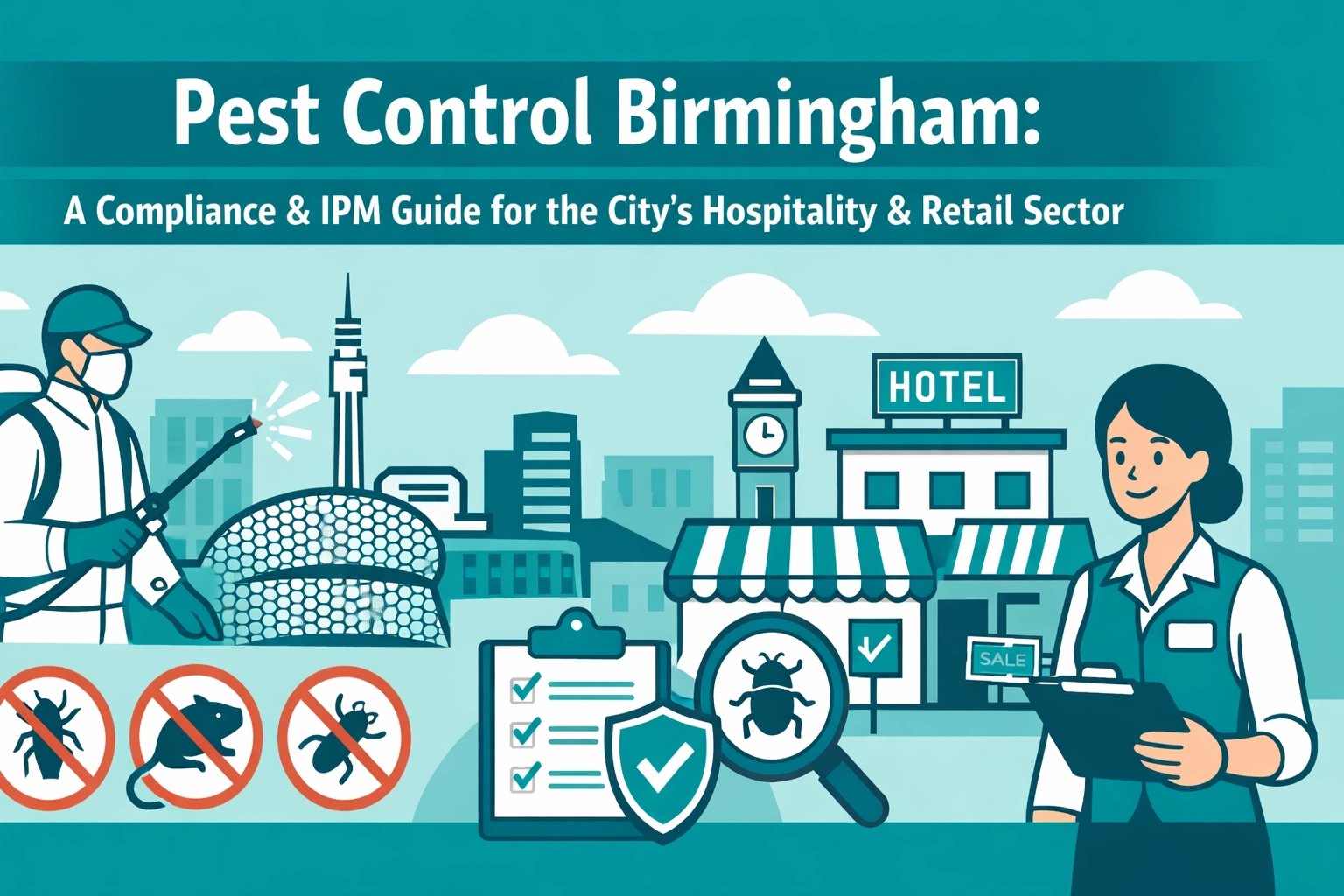
Pest Control Birmingham: A Compliance & IPM Guide for the City's Hospitality & Retail Sector
February 14, 2026
 aim_admin -
 February 14, 2026 -
 Ant Treatment
If you're running a restaurant on Broad Street, managing a retail unit in the Bullring, or overseeing a café in the Jewellery Quarter, there's one question that should be keeping you up at night: Is your pest control legally compliant?
Because here's the thing: Birmingham Environmental Health doesn't mess about. A hotel in the city was recently hit with a £120,000 fine after mice were found scurrying around the restaurant and bar. A takeaway? £12,000 for cockroaches. Those aren't just scary headlines. They're real businesses that thought they could cut corners or rely on reactive pest control. They were wrong.
Let's talk about why Integrated Pest Management (IPM) isn't just a fancy industry buzzword: it's the compliance framework that's going to keep your doors open, your reputation intact, and Environmental Health off your back.
The Legal Framework: What Birmingham Businesses Actually Need to Know
You don't need a law degree to understand your obligations, but you do need to know the legislation that Environmental Health officers use when they walk through your door with a clipboard.

The Food Safety Act 1990 and the Food Safety and Hygiene (England) Regulations 2013 are the big ones. In simple terms, they require all food premises to be kept "as pest free as is practicable." Notice that word: practicable. It doesn't mean zero pests forever (that's unrealistic), but it does mean you need a documented, proactive system in place to prevent and manage infestations.
Then there's EU Regulation No. 852/2004, which remains embedded in UK law post-Brexit. It mandates that food premises must "permit good food hygiene practices, including protection against contamination and, in particular, pest control." That's not guidance. That's law.
And if you think this only applies to restaurants, think again. Supermarkets, cafés, hotels, pubs, takeaways, catering businesses, and even warehouses storing food are all covered. If you handle food in Birmingham, you're in scope.
Why Birmingham Enforcement is Getting Tougher
Birmingham City Council's Environmental Health team has been flexing its muscles lately, and for good reason. The city's hospitality and retail sectors are massive: Broad Street alone is one of the UK's busiest nightlife strips, and the Bullring sees over 36 million visitors a year. That's a lot of food, a lot of footfall, and a lot of potential for things to go wrong.
When inspectors find evidence of pest activity: droppings, gnaw marks, live sightings: they don't just issue a slap on the wrist. They can:
- Serve a Hygiene Improvement Notice requiring immediate action
- Issue a Closure Order until the problem is fixed
- Downgrade your Food Hygiene Rating (hello, zero-star sticker in your window)
- Prosecute, which leads to fines that can cripple small businesses
The £120,000 hotel fine wasn't an isolated case. Birmingham is making examples of businesses that fail to take pest control seriously. The message is clear: proactive compliance or pay the price.
What is IPM, and Why is it the Gold Standard?
Integrated Pest Management isn't about calling someone when you spot a mouse. It's about building a systematic, documented, and preventative approach to pest control that Environmental Health officers actually want to see.

Here's what proper IPM looks like for a Birmingham city centre business:
1. Regular Monitoring and Inspections
You can't manage what you don't measure. IPM requires scheduled inspections: typically monthly or quarterly depending on your risk level. This isn't a bloke poking around with a torch. It's detailed monitoring using sticky traps, bait stations, and documented risk assessments covering every vulnerable area: kitchens, storage rooms, bin stores, delivery bays.
2. Structural and Operational Controls
Your premises need to be designed and maintained to make life difficult for pests. That means:
- Sealing gaps around pipes, doors, and vents
- Installing mesh screens on extraction units
- Keeping waste in sealed, pest-proof bins
- Storing food off the floor in covered containers
- Maintaining a spotless cleaning schedule
If you're operating out of an older Jewellery Quarter building with Victorian pipework and dodgy brickwork, this is where you'll need extra attention.
3. Documentation and HACCP Integration
HACCP (Hazard Analysis and Critical Control Points) is the risk management framework that underpins food safety. Pest control is a critical control point. That means every inspection, every treatment, every sighting needs to be logged. Environmental Health will ask to see your records. If you can't produce them, you're non-compliant.
4. Qualified Professional Support
This is where the private vs. council debate becomes crucial for Birmingham businesses. Let's break that down.
Private Professional Pest Control vs. Birmingham City Council Services
Birmingham City Council does offer a pest control service. It's cheap: sometimes free for residential properties: and it'll send someone out to deal with rats or mice. But here's the reality: council services are designed for domestic problems, not commercial compliance.

If you're running a restaurant in Brindleyplace or a shop in the Mailbox, council pest control won't cut it for several reasons:
Speed and Availability: Council services are stretched. You might wait days for an appointment. If Environmental Health turns up and finds evidence of rodents, you can't afford to wait. A private contractor like us can be on-site the same day.
Comprehensive Service: Council pest control typically handles reactive treatments: dealing with an existing infestation. They don't provide the ongoing monitoring, documentation, and preventative maintenance that IPM requires. Private commercial pest control does.
Business-Specific Expertise: A technician dealing with a mouse in someone's kitchen isn't the same as someone conducting a full BRCGS-compliant audit of your commercial kitchen. You need specialists who understand the compliance landscape for hospitality and retail.
Contractual Accountability: With a private pest control contract, you get guaranteed service levels, documented visits, and evidence of compliance. That's what your insurance provider, your franchisor, and Environmental Health want to see.
Out-of-Hours Support: If you spot a rat running through your dining room on a Saturday night, you need help now. Private contractors offer emergency callouts. Council services don't.
Building Your Compliance Framework: A Practical Checklist
So, what does a compliant pest control system actually look like for your Birmingham business? Here's the framework we implement for clients across the city:
Step 1: Initial Risk Assessment
A full site survey identifying vulnerable areas, current pest activity, and structural deficiencies. For older premises in areas like Digbeth or the Jewellery Quarter, this often uncovers issues with drains, wall cavities, and loading bay access.
Step 2: Tailored IPM Plan
Based on your specific business type, footfall, and premises layout. A Broad Street nightclub has different risks than a retail bakery in the Bullring.
Step 3: Scheduled Monitoring
Monthly or quarterly visits with documented inspections, trap checks, and risk scoring. Every visit produces a written report that goes into your compliance file.
Step 4: Staff Training
Your team needs to know what to look for. We provide short training sessions on recognising pest signs, reporting protocols, and hygiene best practices.
Step 5: Emergency Response
24/7 callout availability for urgent issues. Because pests don't respect business hours.
Step 6: Ongoing Documentation
All records stored digitally and accessible for audits, inspections, or insurance claims.
Why Location Matters: Birmingham-Specific Pest Risks
Birmingham's diverse building stock and dense urban environment create unique challenges. If you're operating in:
- Broad Street or the Chinese Quarter: High footfall, late-night food service, and proximity to canals increase rodent risk.
- The Bullring or Grand Central: Shared infrastructure with multiple food outlets means pests can spread quickly between units.
- Digbeth or the Jewellery Quarter: Older buildings with crumbling brickwork, aging drainage, and hidden access points.
- Brindleyplace or the Mailbox: Modern developments with underground car parks, service corridors, and complex waste management systems that pests exploit.
You need a pest control partner who understands these local nuances. Not someone parachuting in from out of town.
The Bottom Line: Compliance Isn't Optional
Let's be brutally clear: pest control Birmingham isn't just about keeping the Health and Safety Executive happy. It's about protecting your business from catastrophic reputational damage, eye-watering fines, and potential closure.

If you're relying on reactive pest control: calling someone only when you spot a problem: you're gambling with your business. The moment Environmental Health walks in and finds evidence of rodent activity, your Food Hygiene Rating tanks, your customers lose confidence, and you're facing remediation costs that dwarf the price of a proper contract.
IPM is the only approach that stands up to scrutiny. It's proactive, documented, and designed around the legal framework that Birmingham businesses operate within.
Let's Get Your Birmingham Business Compliant
Whether you're launching a new café in Kings Heath, managing an established restaurant in Moseley, or overseeing a retail chain with multiple Birmingham city centre locations, commercial pest control Birmingham needs to be part of your operational infrastructure: not an afterthought.
We work with hospitality and retail businesses across Birmingham, from independent traders to national chains. Our contracts are transparent, our response times are rapid, and our documentation is audit-ready.
If you're not confident that your current pest control arrangements meet the legal standards we've outlined here, it's time for a conversation. Because the next Environmental Health inspection won't be a friendly chat: it'll be a compliance test. And you need to pass.
Get in touch with us to arrange a no-obligation site assessment. Let's make sure your Birmingham business is protected.



Contact Us Today same day call out available
Having rats, mice and squirrels in your property or place of work can be traumatising, not only for the effect on your health, but also the damage that can be caused to personal property, belongings or stock.







out of 5
Based on the opinion of 0 people

Reviews