 01902 475175
 instant quote
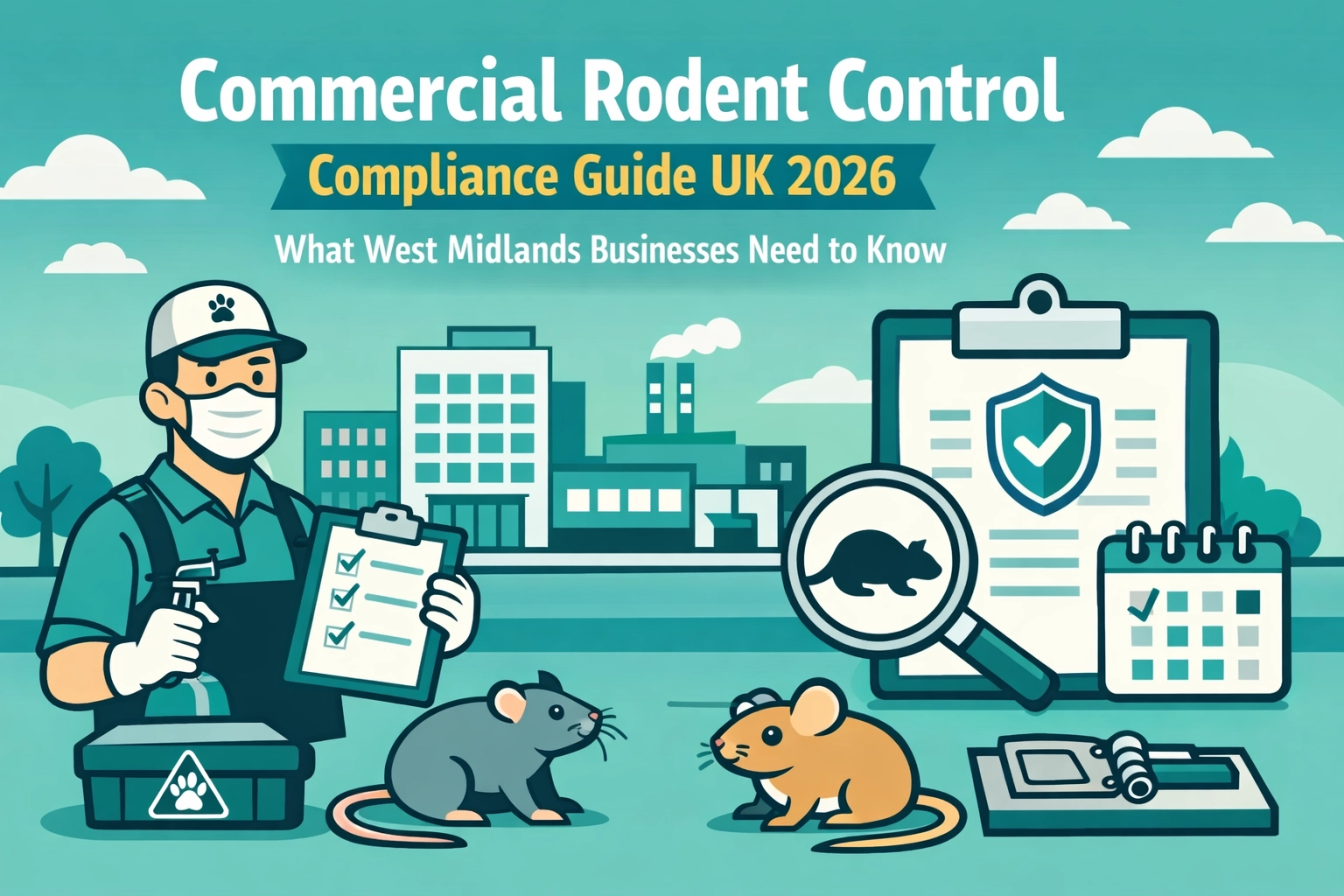
Commercial Rodent Control Compliance Guide UK 2026: What West Midlands Businesses Need to Know
February 12, 2026
 aim_admin -
 February 12, 2026 -
 Ant Treatment
If you run a commercial premises in Wolverhampton, Birmingham, or anywhere across the West Midlands, you need to know this: the rules for rodent control changed dramatically on January 1st, 2026. And we're not talking about minor tweaks: we're talking about mandatory certification requirements, restricted rodenticide use, and compliance standards that could shut your business down if you get them wrong.
Whether you're managing a warehouse in Bilston, running a school in Dudley, or operating a food business in the Black Country, these changes affect you directly. Let's break down exactly what's changed, what you need to do about it, and how to stay compliant without the headache.
The Big Shift: CRRU Certification Is Now Mandatory
Here's what caught many businesses off-guard: all professional rodenticide use now requires CRRU UK-approved certification. This isn't optional anymore: it's a legal requirement as of 2026.
If your pest control contractor, facilities manager, or any staff member purchases or applies professional-strength rodent control products, they must hold valid CRRU certification at the point of sale. No exceptions. The days of buying professional rodenticides without proof of competence are over.
And there's a critical timeline issue you need to know about: certificates expire every 5 years. If your qualification was obtained before 2021, it's no longer valid. You need to recertify, and booking slots are currently running 4-8 weeks out across the Midlands.

What This Means for Different Business Types
Food Businesses: The Highest Scrutiny
If you operate any food business: restaurants, cafés, takeaways, food manufacturing, or warehousing with food products: you're in the highest-risk category. Environmental Health Officers expect to see:
- Professional pest control contracts (not DIY approaches)
- Monthly monitoring visits as a minimum (fortnightly for high-risk sites)
- Documented treatment records available for inspection
- BPCA-registered contractors strongly recommended
Non-compliance here isn't just a slap on the wrist. We're talking £20,000 fines, closure orders, or even prosecution. Food safety legislation doesn't mess about, and neither should you.
Schools, Hotels, and Public-Facing Venues
If you manage premises where the public visits: schools, hotels, leisure centres, retail spaces: you need professional pest management contracts for licensing compliance. Quarterly inspections used to be acceptable; now monthly visits are becoming the standard, particularly if you handle any food service.
Guest-facing or student-facing areas create additional challenges. Bait stations must be discreet, tamper-proof, and properly secured. One incident with a child or guest finding improperly secured rodenticides, and you're looking at serious liability issues.
Warehousing and Industrial Sites
Warehouses present unique rodent control challenges: large footprints, multiple entry points, storage of goods that attract pests. The 2026 regulations hit this sector particularly hard because of the outdoor restrictions on rodenticides (more on that in a moment).
For distribution centres and industrial premises in areas like Willenhall, Wednesfield, or Coseley, you'll need comprehensive rodent control strategies that go well beyond simply laying bait.

The SGAR Outdoor Ban: What You Can't Do Anymore
This is the regulation that's caused the most confusion: Second-generation anticoagulant rodenticides (SGARs) are now illegal for outdoor use unless directly connected to buildings or structures.
What does "directly connected" actually mean? The bait station must be adjacent to the building perimeter. You cannot place rodenticides in:
- Open yards or car parks
- Disconnected outbuildings
- Hedgerows or field boundaries
- Garden areas away from structures
Why the restriction? Wildlife protection. Studies found 79-80% of barn owls and 89% of red kites in the UK contain rodenticide residues from secondary poisoning: they eat poisoned rodents and accumulate toxins. The regulations aim to reduce this environmental impact.
For West Midlands businesses with large outdoor premises, this means rethinking your entire rodent control strategy. Traditional "bait everywhere" approaches are no longer legal or effective.
Farm Assurance Schemes: No Longer Sufficient
Here's a critical change that's caught many agricultural and mixed-use businesses by surprise: farm assurance scheme membership no longer qualifies as proof of rodenticide competence.
If your site holds Red Tractor certification, RSPCA Assured status, or any other farm assurance scheme, that's excellent for your overall standards: but it doesn't replace CRRU certification for rodenticide use. You need separate, specific training.
This affects farms with commercial operations, agricultural suppliers, rural business parks, and any business that assumed their existing accreditations covered pest control competence. They don't. Not anymore.
Why Integrated Pest Management Beats Reactive Baiting
The regulatory shift towards CRRU certification and SGAR restrictions reflects a broader change in how professional pest control works: Integrated Pest Management (IPM) is now the gold standard, not reactive "bait and forget" approaches.
What's the difference? IPM is a comprehensive strategy that includes:
Prevention First: Identifying and blocking entry points before rodents become a problem. This includes CCTV drain surveying to find underground access routes: a critical step most businesses overlook.
Monitoring and Assessment: Regular inspections to detect early activity, understand rodent behaviour patterns, and identify attractants on your premises.
Multiple Control Methods: Using traps, exclusion, sanitation improvements, and habitat modification alongside minimal rodenticide use only where strictly necessary.
Documentation and Review: Maintaining detailed records of all pest activity, treatments applied, and outcomes achieved.
Reactive control: calling someone when you see a rat, throwing down some bait, hoping it works: doesn't meet 2026 compliance standards. It's also significantly less effective and more expensive long-term.

CPD Requirements: Keeping Your Certification Current
The CRRU system now mandates Continuing Professional Development (CPD) for those holding older certificates. If you qualified through BASIS PROMPT or BPCA registration before the current standards, you'll need to engage with ongoing CPD to maintain compliance.
This affects in-house facilities teams at larger West Midlands businesses. If you employ staff who handle pest control internally rather than contracting it out, those team members need current certification plus documented CPD participation.
The CPD requirement exists because rodent control best practices evolve: new products, new regulations, new techniques. What you learned five years ago might not reflect current legal requirements or effectiveness standards.
What West Midlands Businesses Must Do Right Now
Let's get practical. Here's your immediate action checklist:
1. Verify Your Contractor's Credentials
If you use an external pest control service in Wolverhampton or elsewhere in the region, confirm they hold current CRRU UK certification. Ask to see proof. Reputable contractors won't hesitate to provide it.
2. Check Staff Certification Dates
If your business handles rodenticides in-house, audit every staff member's qualification date. Anything obtained before 2021 needs immediate renewal. Certificates expiring within the next 12 months should be booked for recertification now: waiting lists are long.
3. Review Your Pest Management Documentation
Do you have documented protocols covering monitoring schedules, treatment records, and emergency procedures? Are your records being retained for at least 2 years as required? Can you produce them for an EHO inspection tomorrow if needed?
4. Audit Your Current Rodent Control Setup
Where are bait stations located? Are any positioned in now-illegal outdoor locations? Are they tamper-resistant and properly secured? When was your last comprehensive site assessment?
5. Check Your Insurance Coverage
Review your business insurance policies for pest-related incident coverage. Regulatory non-compliance might affect your coverage if incidents occur.

How AIM Environmental Ensures 100% Compliance
At AIM Environmental Group, we've restructured our entire commercial rodent control service around the 2026 regulatory framework. When we work with businesses across Wolverhampton, Birmingham, Dudley, Walsall, and the wider West Midlands, here's what sets us apart:
Full CRRU Certification: Every technician holds current, valid CRRU UK certification with ongoing CPD participation. We don't send anyone to your site who isn't legally qualified to be there.
IPM-First Approach: We start with comprehensive site assessments, mice control prevention strategies, and drain surveys before considering rodenticide application. When we do use bait, it's the minimum effective quantity in full compliance with placement restrictions.
Documented Compliance: We maintain detailed treatment records, monitoring reports, and site plans that meet EHO inspection standards. Your documentation is always audit-ready.
Monthly Monitoring: We schedule regular site visits appropriate to your business risk level: monthly minimum for most commercial premises, with increased frequency for food businesses or high-activity sites.
Emergency Response: Pest problems don't wait for convenient times. We provide rapid response for pest incidents that could affect your operations, licensing, or compliance status.
Local Expertise: We understand West Midlands commercial premises: the common rodent pressure points in industrial estates, the specific challenges of older Victorian commercial buildings in Wolverhampton town centre, the seasonal patterns affecting warehouses near the canal network.
The Cost of Non-Compliance vs. Professional Management
Let's talk numbers. A professional commercial rodent control contract might run £150-300 monthly depending on premises size and risk level. That feels like an expense when budgets are tight.
But consider the alternative costs of non-compliance:
- £20,000+ fines for food safety breaches
- Closure orders that stop all trading
- Insurance claims from contaminated stock
- Reputational damage from public pest incidents
- Legal liability from improper rodenticide use
We've seen businesses in the Black Country face closure during critical trading periods because they couldn't demonstrate compliant pest control when inspected. The regulatory framework doesn't offer second chances: either you're compliant or you're not operating.
Professional pest management isn't an expense; it's risk mitigation and business continuity insurance.

Getting Started With Compliant Commercial Rodent Control
If you're reading this and realising your current pest control setup doesn't meet 2026 compliance standards, don't panic: but don't delay either.
Contact us for a no-obligation commercial premises assessment. We'll audit your current situation, identify compliance gaps, and provide a clear action plan to get you fully compliant with UK rodent control regulations.
Whether you're in Wolverhampton, Birmingham, Dudley, Walsall, Stourbridge, or anywhere across the West Midlands, we provide professional commercial pest control that protects your business, your reputation, and your legal standing.
The regulatory landscape changed in 2026. Your rodent control approach needs to change with it.



Contact Us Today same day call out available
Having rats, mice and squirrels in your property or place of work can be traumatising, not only for the effect on your health, but also the damage that can be caused to personal property, belongings or stock.







out of 5
Based on the opinion of 0 people

Reviews