
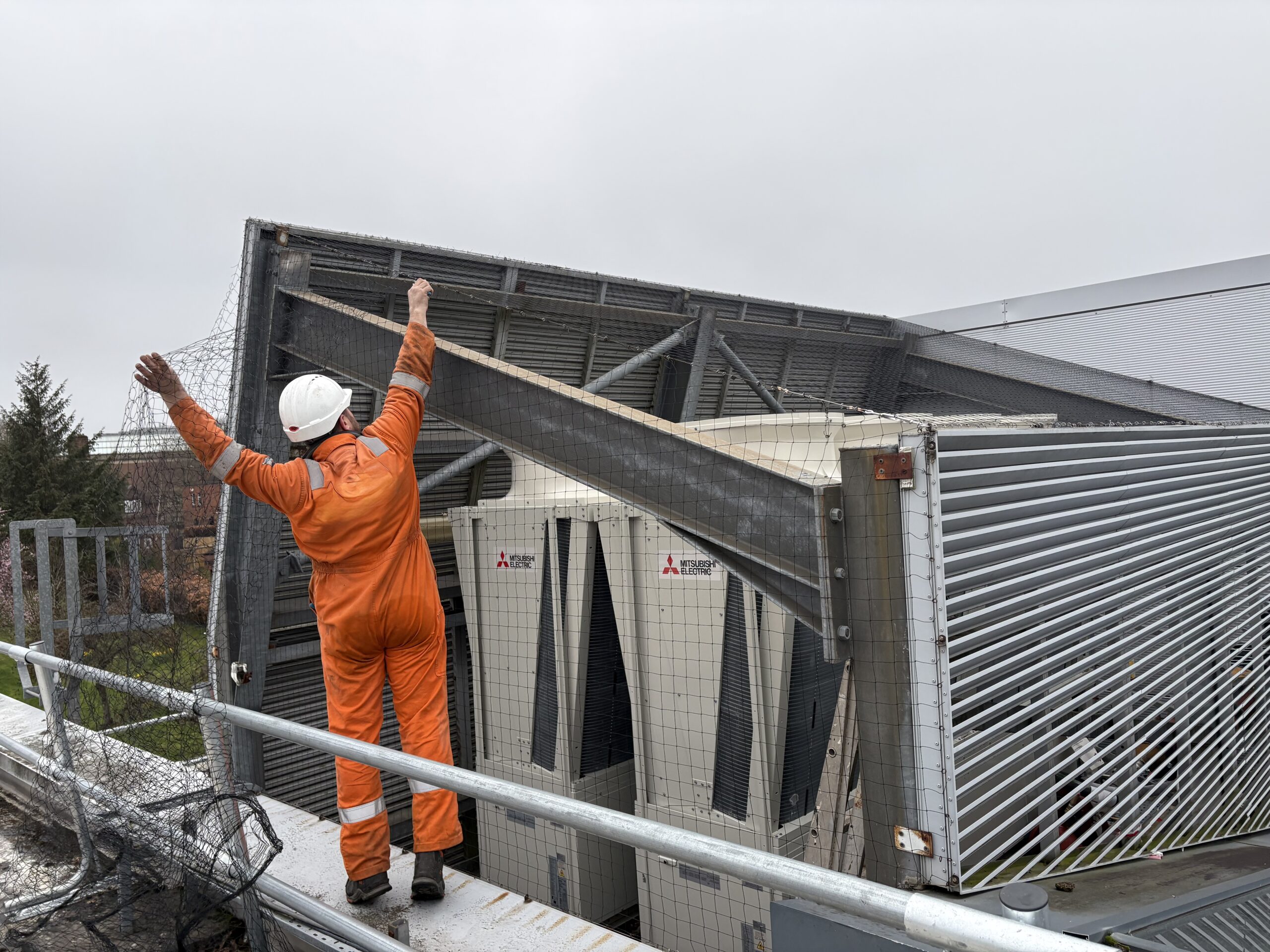
Pest bird control for businesses becomes necessary when birds begin nesting, roosting or feeding around a commercial property and their activity starts creating hygiene, safety or maintenance problems.
The first warning signs are often easy to overlook. A few pigeons on a roof may not seem urgent, but repeated activity can lead to accumulated droppings, blocked gutters, damaged equipment, nesting inside buildings and complaints from employees or customers.
Acting early usually gives a business more control over the solution. It allows bird activity to be assessed before contamination spreads, nesting becomes established or legal restrictions make work more complicated.
The Main Warning Signs at a Glance
Your business may need professional pest bird control if you notice:
- Droppings building up on roofs, ledges, entrances or walkways
- Birds returning to the same area every day
- Nesting materials around gutters, roof spaces or equipment
- Scratching, flapping or cooing inside the building
- Blocked gutters, drains or ventilation openings
- Birds gathering beneath or around solar panels
- Damage to roofing, paintwork, signs or machinery
- Insects appearing near old nests or droppings
- Complaints from staff, customers, tenants or neighbours
- Hygiene, audit or inspection concerns
One isolated visit from a bird does not necessarily indicate an infestation. Repeated activity, increasing numbers and visible nesting are stronger signs that the property is providing food, shelter or a secure roosting site.
1. Bird Droppings Are Accumulating Around the Property
An increasing amount of bird droppings is one of the clearest signs of an established roost.
Check areas such as:
- Building entrances
- Loading bays
- Window ledges
- Roof edges
- Fire escapes
- External stairs
- Air-conditioning units
- Signage
- Staff parking areas
- Outdoor seating
Droppings can make surfaces unsightly, but the concern is not purely cosmetic. They may create slip hazards on frequently used walkways and contaminate areas where products, ingredients or packaging are stored.
2. Birds Return to the Same Ledges, Roofs or Beams
Regular bird activity is more significant than occasional sightings.
Pigeons and other urban birds often favour locations that provide shelter from wind and rain, a good view of feeding areas and protection from disturbance. Once a suitable roost has been established, birds may return to it repeatedly.
Common commercial roosting points include:
- Warehouse roof beams
- Parapet walls
- Canopies
- Pipework
- Commercial signs
- Lighting systems
- CCTV equipment
- Plant rooms
- Balcony recesses
- Covered loading areas
Keep a brief record of where and when birds appear. This can reveal patterns that are difficult to identify from a single inspection.
3. You Can See Nesting Materials or Active Nests
Twigs, feathers, grass, packaging and other debris around rooflines or machinery may indicate that birds are building nests nearby.
Nests are commonly found:
- Beneath solar panels
- Behind signs
- Inside roof voids
- On warehouse beams
- Around guttering
- Within damaged cladding
- Above suspended ceilings
- Near ventilation systems
Do not remove or interfere with an active nest without appropriate advice.
Wild birds, their eggs and nests are protected under wildlife legislation in England, with specific rules and exceptions depending on the circumstances. Government guidance says non-lethal measures should be considered first, and work should be timed or planned to avoid harming birds wherever possible.
4. You Hear Birds Inside the Building
Scratching, fluttering or repeated cooing above ceilings or inside wall spaces can indicate that birds have entered the building.
This is particularly common in:
- Warehouses
- Factories
- Agricultural buildings
- Older commercial premises
- Buildings with damaged roof panels
- Sites with regularly opened loading doors
Indoor bird activity can affect stock, equipment and working areas. It may also indicate defects in the building fabric that allow other pests to enter.
5. Gutters & Drainage Systems Keep Becoming Blocked
Bird nests, feathers and droppings can collect in gutters and downpipes. Over time, this material may restrict water flow and contribute to overflowing gutters, damp patches and avoidable maintenance work.
Warning signs include:
- Water spilling over gutter edges
- Plants growing from blocked guttering
- Persistent damp near the roofline
- Nesting material visible in downpipes
- Water pooling on flat roofs
- Repeated gutter-cleaning requirements
6. Birds Are Nesting Beneath Solar Panels
Solar panels can create a sheltered gap between the panels and the roof. For pigeons, this can provide protection from weather and predators while allowing easy access to nearby feeding areas.
Possible signs include:
- Birds repeatedly entering beneath the panels
- Nesting material around panel edges
- Droppings on the roof or in gutters
- Early-morning noise above occupied rooms
- Feathers and debris collecting below the roofline
- A visible increase in pigeon activity
Solar panel bird proofing should create a secure physical barrier without damaging the panels, wiring or roof covering. The installation also needs to account for active nests and wildlife law.
7. Property, Equipment or Signage Is Being Damaged
Persistent bird activity can contribute to deterioration around a commercial property.
Droppings may build up on painted surfaces, metalwork, roofs and signs. Nesting material can obstruct drainage, while birds may dislodge lightweight materials or disturb insulation while accessing roof spaces.
Inspect areas where birds regularly gather for:
- Staining and surface deterioration
- Loose roof materials
- Damaged insulation
- Blocked ventilation openings
- Debris around machinery
- Fouling on solar panels
- Damage near electrical equipment
The earlier the access point or roosting surface is identified, the easier it is to select a proportionate bird-proofing method.
8. Staff or Customers Are Raising Concerns
Complaints often indicate that bird activity has progressed beyond a minor maintenance issue.
Employees may report noise, smells, droppings near work areas or birds entering the building. Customers and visitors may notice fouling around entrances, outdoor seating, car parks or signage.
For public-facing businesses, visible bird contamination can affect how clean and well-managed the premises appear. This is particularly relevant to:
- Restaurants and takeaways
- Hotels
- Schools
- Retail premises
- Healthcare settings
- Leisure venues
- Managed residential properties
Record where complaints originate. Several reports relating to the same part of a building can help locate a concealed nest or regular roost.
9. Bird Activity Is Creating Hygiene or Compliance Concerns
Commercial bird control becomes especially important where businesses handle food, store sensitive products or operate within audited environments.
Businesses should pay particular attention to:
- Food storage and preparation areas
- Loading and dispatch zones
- Packaging facilities
- Production lines
- Water tanks
- Ventilation systems
- Waste storage areas
A pest management record should document sightings, affected locations, corrective action and prevention measures. This creates a clearer audit trail than relying on informal reports.
10. Flies, Mites or Other Insects Appear Near Old Nests
Bird nests can support secondary pest activity. The British Pest Control Association notes that mites, ticks, fleas and beetles may be associated with nesting and former bird activity.
This can become noticeable when birds leave a nest and parasites move into surrounding rooms or work areas.
Possible signs include:
- Small biting insects near windows or ceilings
- Beetles around roof spaces
- Increased fly activity
- Staff reporting unexplained irritation
- Insects appearing after a nest has been removed
Why Delaying Pest Bird Control Can Cost More
Early bird activity may only require targeted proofing of a small number of surfaces. Once birds have spread across a building, the work may involve cleaning, waste removal, access equipment and several different proofing systems.
Delays can lead to:
- Larger contaminated areas
- More frequent cleaning
- Damage to roofs and equipment
- Increased health and safety concerns
- Disruption to employees or customers
- More complicated access requirements
- Active nests limiting when work can proceed
- Recurring problems across several parts of the site
For this reason, pest bird control for businesses is best viewed as planned property protection rather than a last-minute response to an infestation.
Which Bird-Proofing Method Is Most Appropriate?
There is no single bird-control system that works for every building.
The appropriate method depends on the bird species, the surface being protected, the level of bird pressure, access requirements and whether nesting is already taking place.
Bird Netting
Bird netting creates a physical barrier around spaces such as loading bays, roof voids, courtyards and structural beams. It can be particularly effective when birds need to be excluded from a defined area.
Netting must be correctly specified, tensioned and maintained. Poorly installed or damaged netting can leave gaps or create risks to wildlife.
Bird Spikes
Bird spikes can prevent pigeons from settling on ledges, signs, parapets and other narrow surfaces.
They are most suitable when the entire landing area can be covered. Installing a short strip while leaving nearby surfaces available may simply move the birds elsewhere on the same building.
Solar Panel Proofing
Solar panel proofing blocks access to the sheltered space beneath an array while allowing the panels to remain ventilated.
Before installation, the roof should be checked for active nests, accumulated droppings and damage. Cabling and roof materials should also be considered when selecting the fixing method.
Guano Removal and Cleaning
Where droppings have accumulated, controlled removal may be required before proofing is installed.
Cleaning alone is not bird control. Unless access and roosting points are addressed, contamination is likely to return.
A Combined Site-Specific Plan
Large or complex commercial sites may need several measures. A warehouse could require netting beneath a loading canopy, spikes on signs and repairs to damaged cladding.
BPCA guidance describes pigeon proofing as a specialist activity and identifies barriers, spikes, netting and wires among the commonly used methods.
Plan the Next Step Before the Problem Spreads
Repeated roosting, nesting, droppings and indoor bird activity are signs that a commercial property needs more than occasional cleaning.
A professional survey can identify the species involved, locate nesting and access points, assess contamination and recommend a humane, legally appropriate solution. This may involve bird netting, spikes, solar panel proofing, cleaning or a combination of measures.
Aim Environmental supports warehouses, schools, hospitality businesses, manufacturers, property managers and other commercial organisations across the West Midlands. The business has more than 75 years of combined in-house pest control experience, RSPH Level 2 qualified technicians and £10 million public and employer liability cover.